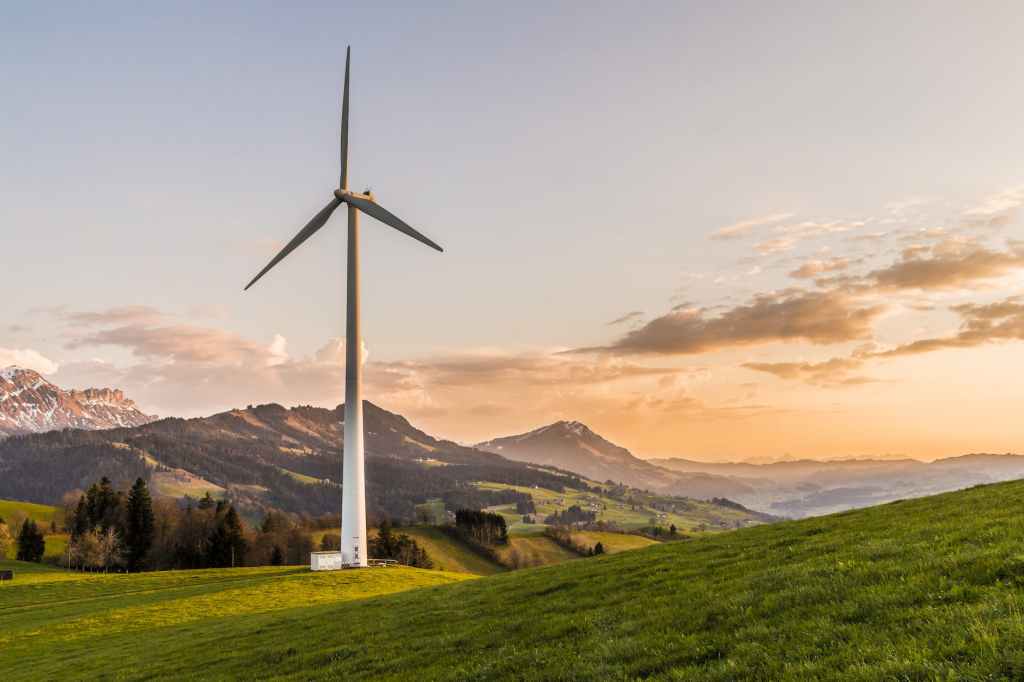
Last week, the UCP introduced a moratorium on the Alberta Utilities Commission (AUC) approving new solar or wind projects, in an unexpected move that is attracting widespread criticism.
The initial justification when announcing the freeze was that they had concerns over:
- development on agricultural land;
- effect of “power plant development on Alberta’s pristine viewscapes”;
- reclamation security requirements;
- development on Crown land;
- system reliability with increasing reliance on renewables.
Utilities Minister and Deputy Minister Nathan Neudorf acknowledged that the moratorium had been imposed without consulting affected parties within the industry, claiming that they’d intended to, but had “a bit of a scheduling glitch.”
This move puts a pause on serious industry investment in the Province, both in the immediate sense of suspending projects that create jobs and economic activity, and sending a chilling message to other companies interested in investing in Alberta that the government is prepared to take drastic actions without notice and without consultation.
The Pembina Institute says that the moratorium pauses 91 projects, at various stages of development, amounting to $25 billion in investment and associated with the potential creation of tens of thousands of jobs. They also suggest that this suspension could exacerbate already-high energy prices.
Environmental groups are outraged, noting that the climate crisis demands a scaling up of renewable energy projects.
While some economists note that there is a dramatic increase in renewable energy projects that likely calls for improving the regulatory infrastructure, they also highlight that the government’s unpreparedness is its own fault – in refusing to acknowledge that growth of renewables was inevitable, and in constantly underestimating the speed of that growth.
(In 2021, the Alberta Electrical System Operator projected that Alberta would pass 1000MW of solar power in 2041. In 2022, Alberta passed 1000MW of solar power.)
The consensus view is that the moratoriam is about ideology, not policy, and that the move – taken without thought or consultation, will do massive damage to a fast-growing industry in the Province, driving investment dollars elsewhere.
Development on Agricultural Land
Especially with Alberta’s ongoing drought issues creating critical failures of crop production this year and in other recent years, it’s easy to see why farmers would be interested in finding other ways of generating revenue from their land.
On a policy level, protecting Alberta’s food production seems like a legitimate objective. Subsidizing farmers and helping them through rough years makes sense, to this end.
However, restricting the use of agricultural land to prevent private landowners from reducing its agricultural output would be problematic. Among other things, that would be hostile to the free market, and a very UNconservative thing to do.
To be clear, we’re not talking about windfarms telling farm owners “We’re building here, and you can’t stop us.” We’re talking about farm owners agreeing to put up renewable energy installations on their property.
Seen in that light, it’s difficult to say that ‘developing non-agricultural projects on agricultural land’ presents a policy problem that can be addressed by preventing owners from doing so.
Effect on Pristine Views
This argument seems to crib some of the arguments against coal mining in the Rockies. But, as much as wind farms tend to attract NIMBYism, their impact on the landscape is far less pronounced than coal mines – not so different from the visual effect of the pumpjacks that dot the landscape throughout the Province.
It’s a funny argument, in a Province that has to put up smoke warning signs on roads near its coal power plants.
Reclamation Questions
The parallel drawn – both by advocates and critics of the freeze – is to ‘orphan wells’, with the oil and gas industry having abandoned countless oil wells, with estimated cleanup costs in the tens or hundreds of billions of dollars.
However, there are various differences between oil wells and renewable energy installations: Renewables don’t ‘go dry’ and equipment can be replaced on the same site as it approaches end of life; renewable installations aren’t toxic; and renewable installation owners either own the land or have to work out terms of a lease with the property owner – as distinct from the oil and gas industry, which can generally obtain a right of entry to extract oil and gas under a legislative framework even without consent of the owner. Private property owners are able to protect their legitimate interests against companies looking to set up renewable energy installations from their land, but not against oil and gas companies.
(For the uninitiated…yes: The government of Alberta says that oil and gas companies can go onto private property to set up a toxic oil well, and the government has not effectively regulated these to ensure the restoration of the land after the work is done.)
The irony of the government’s position is stunningly ironic, however: Minister of Transportation Devin Dreeshen argued that Alberta needs “rules that ensure landowners and taxpayers are not burdened with the significant environmental cleanup of renewable energy projects” – parroting arguments that have been in the oil and gas context for many years, and were ignored by successive conservative governments. (While making a tenuous argument against taxpayers maybe having to subsidize cleanup of windmills, this government continues to pursue its R Star program, a massive multi-billion dollar subsidy to the oil and gas industry to incentivize them to clean up their own pollution, which Smith promoted back when she was a paid lobbyist for the oil and gas industry.)
Development on Crown Land
There is, and should be, a process for evaluating proposed projects on Crown Land. None of the coverage here suggests any actual problem in that process that in any way justifies a moratorium.
Grid Reliability
After getting panned widely in the media, Smith went on to – true to form – blame the Feds. The reason she’s freezing renewable energy development is because she can’t build new natural gas plants: “No one is proposing any new natural gas plants because the federal government has created so much uncertainty.”
So the solution is to…create greater regulatory uncertainty for renewables?
As Andrew Leach points out, this doesn’t make sense: The addition of solar energy to the grid does nothing but create cheap electricity when the sun is shining. The effect of the moratorium won’t make the grid more reliable; it will just mean that we don’t get the benefit of additional energy that would be input by renewables.
The Canadian Renewable Energy Association also noted that there are undue regulatory burdens for energy storage projects, which – if removed – would improve the ability of the grid to put renewable energy to work even when generators aren’t at full capacity.


Leave a Reply