In her first media scrum since the election, Danielle Smith said she thinks that Justin Trudeau’s emissions target of net-zero by 2035 is unachievable.
She promised to ‘defend Alberta’s jurisdiction’, arguing that Alberta is entitled to develop its natural resources without interference from Ottawa, and that she may invoke the Sovereignty Act to do so.
She argued that it’s “to re-educate the Federal government and, quite frankly, Eastern media about how our country is supposed to work and how our constitution is supposed to work.” (Recall that this is the Premier whose ethics breach recently triggered the Ethics Commissioner to mandate basic civics training for new MLAs.)
The Alberta Sovereignty Act was a central plank of Smith’s leadership campaign last year – a proposed statute that would allow the Provincial government to ignore Federal laws it deems intrusive, through mechanisms that were unclear and constitutionally dubious, but somehow require a Provincial police service and tax collection agency to give it “teeth”. Various legal experts wrote about how the very notion underlying the Sovereignty Act is at odds with our constitutional order.
Until it passed in December, Smith’s answer to every perceived policy problem was ‘that’s why we need the Sovereignty Act’, and once it passed, she stopped talking about it…until now.
With the benefit of reviewing the legislation, legal experts are divided on whether the Act, as passed, is patently unconstitutional, or just broadly ineffective to do any of what it was supposed to do. Because all the Act does is confer broad executive powers upon invocation by the Legislature, it remains unclear exactly how Smith or her inner circle expect the Act to work in practice.
In fact, the Supreme Court of Canada has held that environmental policies – like the carbon tax – can fall properly into Federal jurisdiction in that they may involve a matter of ‘national concern’. Whether the Impact Assessment Act falls within those lines is currently before that court. Simply, Smith’s suggestion that Alberta’s authority over its natural resources leaves no room for interference by Federal laws…is an inaccurate understanding of the operation of the constitution.
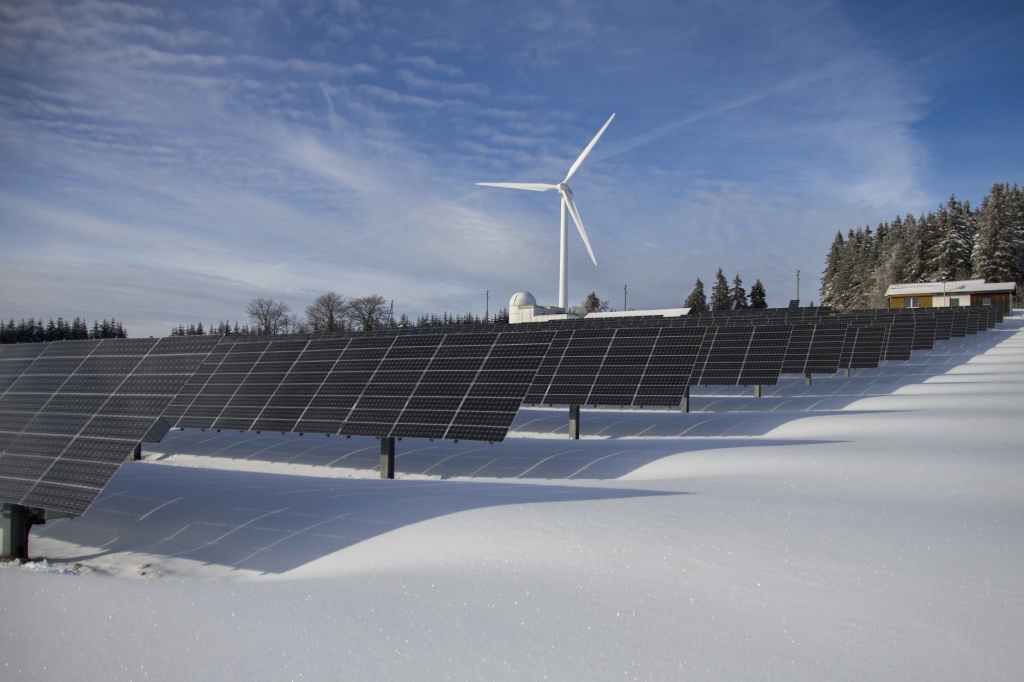
As to the achievability of net zero by 2035, there are estimates, such as by the AESO, suggesting that it’s likely attainable but the price tag is high. However, there are reasons to think that their projections overestimate the cost, including, as economist Andrew Leach points out, that the AESO has consistently underestimated the pace of renewable energy deployment.
Smith argues that the Supreme Court will side with her target of net-zero by 2050. However, this is an aspirational target introduced by the UCP two months ago, with no plan as to how to move toward it (or seemingly any intention to do so), and no interim targets or objectives.
 What Did Danielle Smith Do Now?
Leave a comment